Best Bug Detectors 2026: Find Hidden Cameras, Listening Devices and Trackers
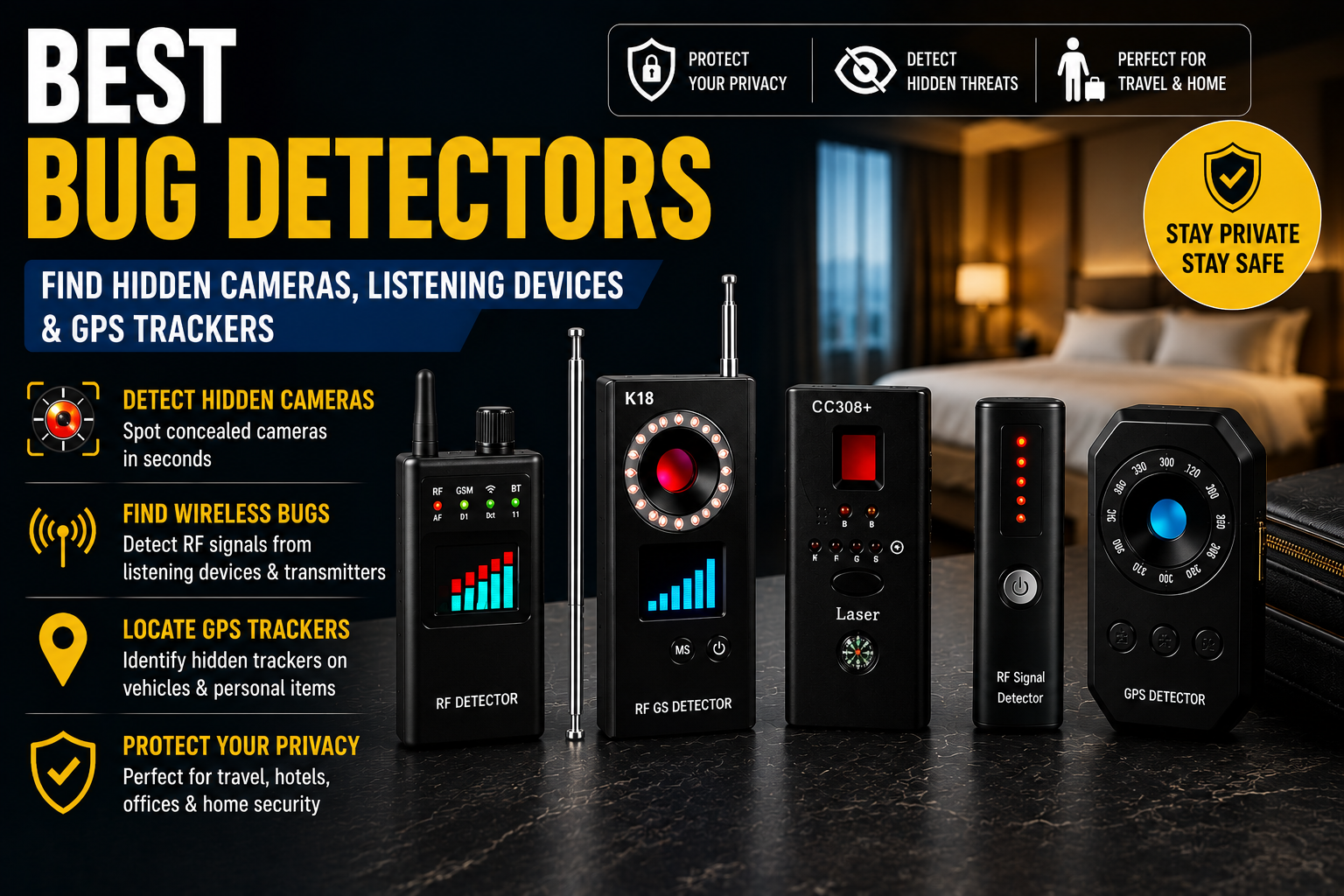
Best Bug Detectors
Privacy concerns have never been greater. Whether you’re staying in a hotel, working from a home office, traveling internationally, or protecting sensitive business information, bug detectors can help identify hidden surveillance devices before they compromise your privacy.
Modern bug detectors can locate hidden cameras, GPS trackers, wireless transmitters, and listening devices that may otherwise go unnoticed.
In this guide, we’ll review the best bug detectors, explain how they work, discuss key features to look for, common mistakes to avoid, and help you choose the right device for your privacy and security needs.
Quick Comparison Table
| Detector Type | Best For | Detects |
|---|---|---|
| RF Detector | Wireless surveillance | Transmitters and wireless bugs |
| Hidden Camera Detector | Visual sweeps | Camera lenses and hidden cameras |
| GPS Tracker Detector | Vehicle inspections | Active GPS tracking devices |
| Multi-Function Detector | General use | Cameras, trackers, and bugs |
| Professional Bug Detector | Advanced users | Multiple surveillance threats |
| Travel Bug Detector | Hotels and rentals | Portable privacy protection |
Why Use a Bug Detector?
Surveillance devices are becoming smaller, cheaper, and easier to conceal.
Bug detectors help identify:
- Hidden cameras
- Audio bugs
- Wireless transmitters
- GPS trackers
- Spy devices
- Unauthorized surveillance equipment
Whether you’re concerned about personal privacy or protecting sensitive information, a quality bug detector provides an additional layer of security.
Best Bug Detectors by Use Case
Best Overall: Multi-Function Bug Detector
Multi-function detectors combine multiple technologies into a single device.
Advantages
- Detects multiple threat types
- Portable design
- Easy operation
- Suitable for most users
Best For
Travelers, homeowners, renters, and business professionals seeking comprehensive protection.
Best for Hidden Cameras: Camera Lens Detector
Camera lens detectors use specialized LEDs and optical filters to identify hidden camera lenses.
Benefits
- Quick visual inspections
- Easy to use
- Effective against concealed cameras
Best For
Hotel rooms, vacation rentals, offices, and changing rooms.
Best for Wireless Bugs: RF Detector
RF detectors identify radio frequency transmissions emitted by many surveillance devices.
Detects
- Wireless microphones
- Hidden transmitters
- WiFi-enabled cameras
- Bluetooth surveillance devices
Best for Vehicles: GPS Tracker Detector
GPS tracker detectors help identify unauthorized vehicle tracking devices.
Ideal Uses
- Personal vehicles
- Company vehicles
- Rental cars
- Fleet management inspections
Best for Travel: Travel Bug Detector
Portable detectors are designed specifically for travelers.
Benefits
- Lightweight
- Rechargeable
- Easy to pack
- Quick room inspections
How Bug Detectors Work
Different bug detectors use different technologies.
Radio Frequency Detection
RF detectors identify wireless signals emitted by surveillance devices.
Common targets include:
- Wireless cameras
- Audio bugs
- Cellular transmitters
- Bluetooth devices
Lens Detection Technology
Camera lens detectors use reflected light to locate hidden camera lenses.
This technology is particularly effective against:
- Hidden cameras
- Spy cameras
- Pinhole cameras
Magnetic Field Detection
Magnetic sensors help identify:
- GPS trackers
- Magnetic surveillance devices
- Hidden electronic equipment
Signal Analysis
Advanced detectors analyze wireless activity to identify suspicious transmissions.
Key Features to Consider
Detection Range
Longer detection range allows you to inspect larger areas more efficiently.
Multiple Detection Modes
The best devices include:
- RF detection
- Lens detection
- Magnetic detection
Adjustable Sensitivity
Sensitivity controls help reduce false positives while improving accuracy.
Battery Life
Long battery life is especially important for travel and field use.
Portability
Compact detectors are easier to carry and use in different environments.
Common Bug Detector Mistakes
Assuming Every Signal Is a Threat
Modern environments contain numerous wireless devices.
Examples include:
- WiFi routers
- Smartphones
- Bluetooth devices
- Smart home equipment
Not every signal indicates surveillance.
Buying the Cheapest Detector Available
Low-cost detectors often produce excessive false positives and inconsistent results.
Reliability matters when privacy is at stake.
Skipping Visual Inspections
A bug detector should supplement—not replace—a thorough physical inspection.
Always examine:
- Smoke detectors
- Clocks
- Power adapters
- Air purifiers
- Decorative objects
Using Maximum Sensitivity Immediately
Starting at maximum sensitivity can overwhelm users with unnecessary signals.
Begin with moderate sensitivity and adjust as needed.
Ignoring Device Updates
Some advanced detectors receive firmware updates that improve performance and detection capabilities.
Bug Detector Placement and Search Strategy
When conducting a privacy sweep, focus on areas where surveillance devices are most commonly hidden.
Hotel Rooms
Inspect:
- Alarm clocks
- Smoke detectors
- TVs
- Power strips
- Air vents
Vacation Rentals
Check:
- Bookshelves
- Decorative objects
- Light fixtures
- Entertainment centers
Home Offices
Inspect:
- Workstations
- Conference areas
- Smart devices
- Networking equipment
Vehicles
Focus on:
- Under seats
- Wheel wells
- Bumpers
- Dashboard areas
Signs You May Need a Bug Detector
You may benefit from a bug detector if:
- You frequently travel
- You stay in vacation rentals
- You handle sensitive business information
- You suspect unauthorized surveillance
- You discover unexplained devices
- You work remotely from multiple locations
Bug Detectors vs Hidden Camera Detectors
| Feature | Bug Detector | Camera Detector |
|---|---|---|
| Hidden Cameras | Yes | Yes |
| Wireless Transmitters | Yes | No |
| GPS Trackers | Some Models | No |
| Listening Devices | Yes | No |
| Overall Coverage | High | Moderate |
For most users, a multi-function bug detector offers the greatest flexibility.
Layered Privacy Protection Strategy
Bug detectors are most effective when used as part of a comprehensive privacy plan.
Layer 1: Physical Awareness
- Inspect unfamiliar environments
- Monitor access to sensitive areas
Layer 2: Surveillance Detection
- Use bug detectors
- Perform regular inspections
Layer 3: Digital Security
- Secure WiFi networks
- Use VPN services
- Enable multi-factor authentication
Layer 4: Ongoing Monitoring
- Conduct periodic sweeps
- Review security practices regularly
Frequently Asked Questions
Can bug detectors find hidden cameras?
Many bug detectors can identify hidden cameras through RF detection, lens detection, or both.
Do bug detectors work in hotels?
Yes. Travel bug detectors are commonly used to inspect hotel rooms and vacation rentals.
Can bug detectors find GPS trackers?
Some models include magnetic and RF detection features capable of identifying GPS tracking devices.
Are bug detectors easy to use?
Most consumer-grade detectors are designed for beginners and require minimal training.
Final Verdict
The best bug detector depends on your environment, privacy concerns, and desired level of protection.
For most users, a multi-function detector that combines RF detection, camera lens detection, and magnetic field detection offers the best balance of capability and convenience.
Travelers may prefer compact portable models, while professionals handling sensitive information may benefit from advanced detectors with enhanced sensitivity and multiple detection modes.
By combining a quality bug detector with regular inspections and good security practices, individuals can significantly reduce the risk of unauthorized surveillance and improve their overall privacy.
ProSpyShop Expert Recommendation
For most people, a multi-function bug detector with RF scanning, camera lens detection, and adjustable sensitivity provides the best value. Focus on reliability, ease of use, and detection versatility rather than choosing the cheapest option available.