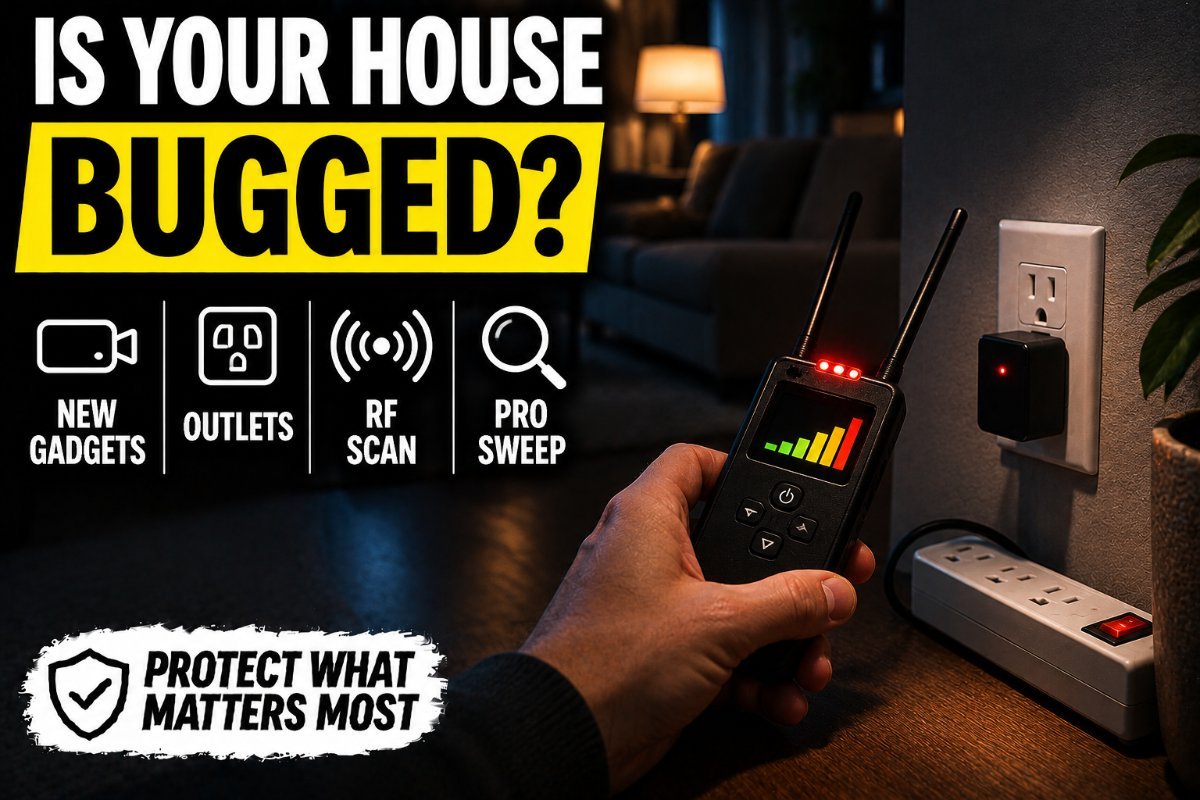
How to Check If Your House Is Bugged (A Room-by-Room Sweep)
Pro Spy Shop earns a commission if you buy through links on this page, at no extra cost to you. As an Amazon Associate I earn from qualifying purchases.
It’s an unsettling feeling: someone knows about a conversation that happened inside your home. Most of the time there’s an ordinary explanation, like a shared account, a smart speaker or someone talking. But sometimes it’s worth checking for a listening device.
Modern bugs are small and cheap, which is the bad news. They also need power and, usually, a way to send audio out, and those needs give them away.
Signs Your Home Might Be Bugged
- Someone repeats details of private conversations that happened at home.
- You find objects that weren’t there before, like a new USB charger, power strip, clock or decoration.
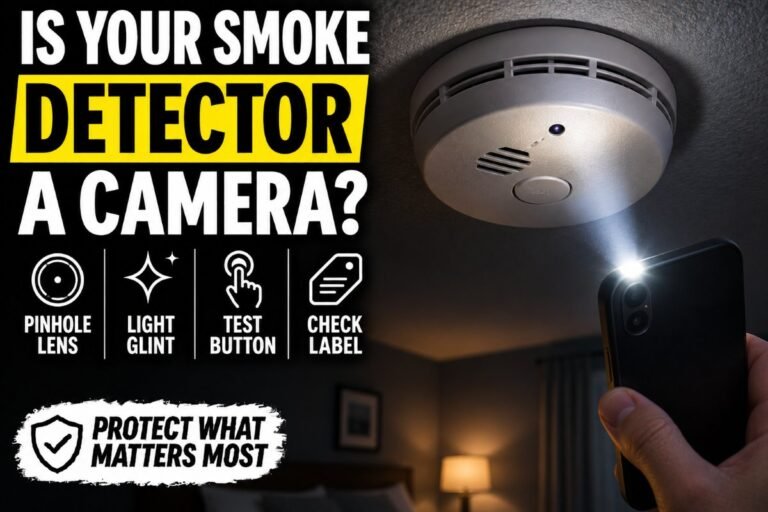
- Wall plates, outlets or smoke detectors look slightly out of place or newly installed.
- Small drill holes, dust or debris near walls or ceilings.
- Your phone shows unknown Bluetooth devices nearby when you’re home alone.
- Someone had access to your home and a reason to listen, like a controlling ex or a dispute.
The Room-by-Room Sweep
Turn off the TV, music and as many electronics as you can, so you can hear faint buzzing and so a detector isn’t overwhelmed. Then go room by room.
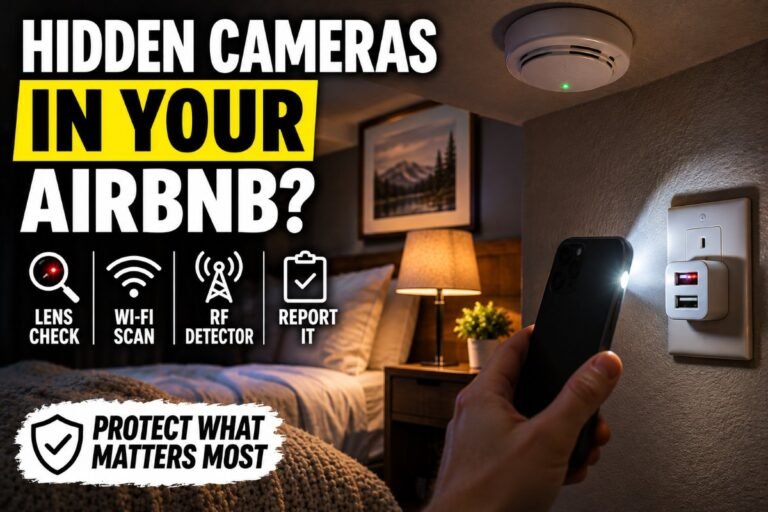
- Check everything plugged in. Chargers, power strips, lamps, air fresheners and clocks. Unplug anything you don’t recognize.
- Inspect outlets and switch plates. Look for plates that are crooked, newer than the rest or slightly raised.
- Look high. Smoke detectors, vents, light fixtures and the tops of shelves.
- Look low and under. Under desks, tables, beds and couch cushions, where small bugs get taped.
- Check gifts and new items. Plush toys, picture frames and decorations someone gave you.
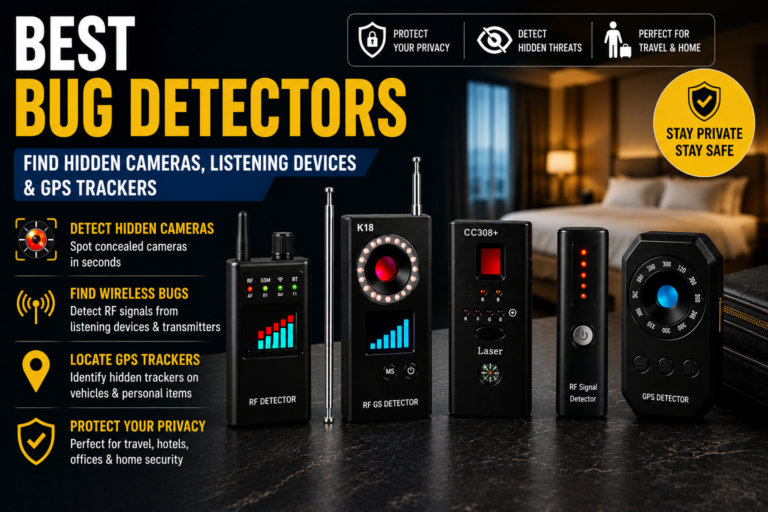
- Scan for signals. Walk slowly with an RF detector or check your phone’s Bluetooth list for unknown devices.
- Check your car too, if you’re worried about one person in particular.
When to Call a Professional
If the stakes are high, like a legal dispute, a stalking situation or business secrets, hire a licensed technical surveillance counter-measures (TSCM) professional. They use equipment far more sensitive than consumer detectors. If you feel unsafe, contact police first, and think about whether removing a device could alert the person who placed it.
Tools for a DIY Sweep
| Product | Best For | Deal |
|---|---|---|
| JMDHKK M8000 RF Detector | Finding transmitting bugs | Check Price on Amazon |
| Flashlight and Inspection Mirror | Checking hidden spots | Check Price on Amazon |
JMDHKK M8000 RF Detector: Finding transmitting bugs
Detects radio signals from transmitting bugs and wireless cameras, with a lens finder built in. It won’t find recorders that store audio without transmitting.
Flashlight and Inspection Mirror: Checking hidden spots
A mirror with a light lets you check behind furniture, under desks and inside vents without moving everything.
Keep Reading
- Best Bug Detectors 2026
- How to Tell If a Smoke Detector Is a Hidden Camera
- Best Hidden Cameras for Home Security
FAQ
How can I tell if my house is bugged?
Look for new or out-of-place devices, check outlets and smoke detectors, scan with an RF detector and watch for unknown Bluetooth devices.
Can my phone detect listening devices?
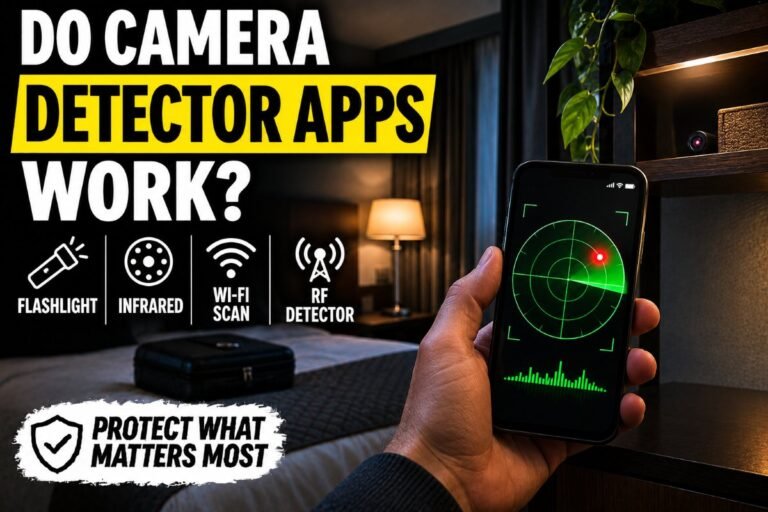
Partly. It can show unknown Bluetooth devices and, with the camera, infrared lights. It can’t detect most RF bugs. A dedicated detector helps.
Do RF detectors find all bugs?
No. Devices that only record and don’t transmit won’t show up. That’s why a physical search matters.
Is it illegal to bug someone’s home?
Recording someone’s private conversations without consent is illegal in many places. Report suspected bugging to police.