Fake Delivery Texts and Holiday Shopping Scams to Watch For
The holiday season is prime time for scammers. You’re expecting packages, shopping on new sites and moving fast, which is exactly the mindset they count on.
The most common trick is a text saying a delivery failed. Here’s how it works, plus the other scams that spike in November and December.
The Fake Delivery Text
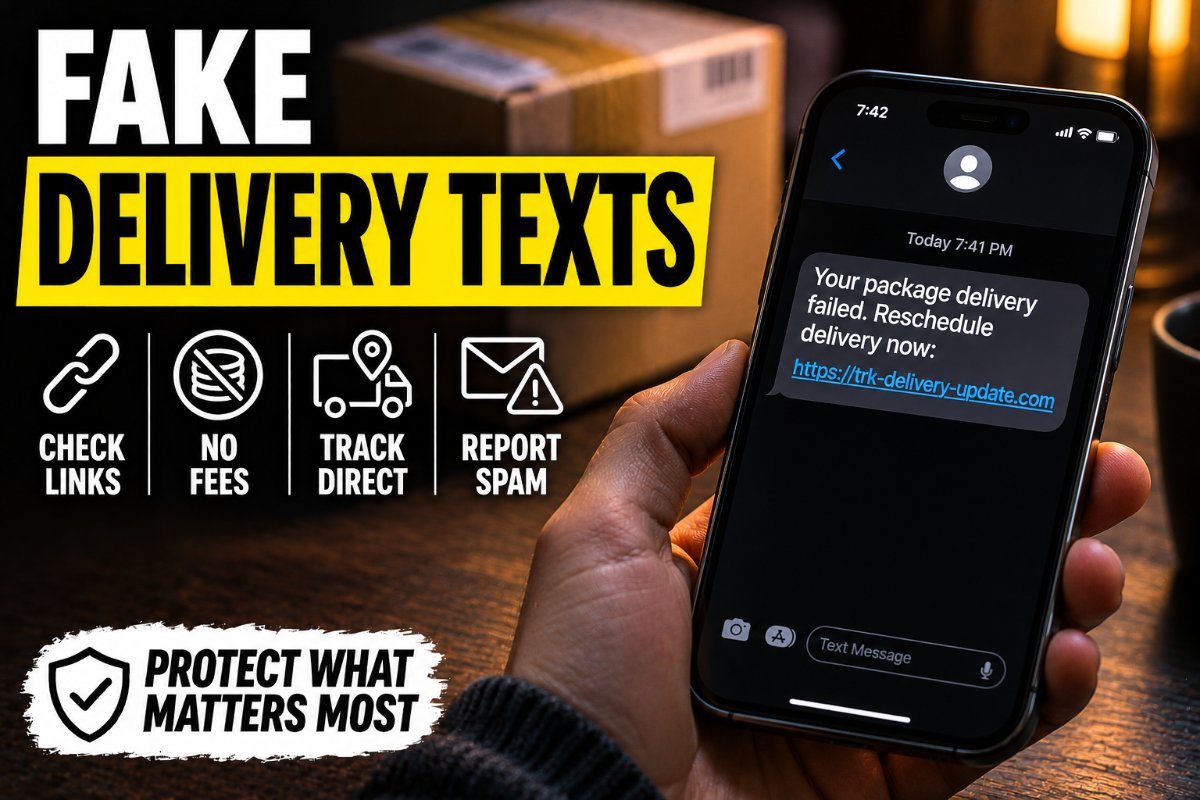
You get a text that looks like it’s from a delivery company: your package is on hold, there’s an address problem or a small redelivery fee. The link goes to a convincing fake page that asks for your card number or personal details.
The tells: the link isn’t the carrier’s real website, the message creates urgency and it asks for payment. Real carriers don’t text you asking for a fee via a random link. When in doubt, go to the carrier’s site directly and paste in your tracking number.
Other Holiday Scams
- Fake shopping sites: new sites with unbelievable prices on popular items, often promoted through social media ads.
- Gift card requests: anyone asking you to pay with gift cards is a scammer. Real businesses and government agencies don’t do this.
- Fake charities: donate through sites you navigate to yourself.
- Account “problem” emails: messages saying your order or account is locked. Log in through the app instead of the link.
- Too-good-to-be-true deals on resale sites: use payment methods with buyer protection.
If You Clicked
- Don’t enter anything else.
- If you entered card details, call your bank right away and ask for a new card.
- Change any password you typed in, plus any account that uses the same one.
- Turn on two-factor authentication.
- Report the text by forwarding it to 7726 (SPAM), which most US carriers accept, and at reportfraud.ftc.gov.
Keep Reading
- The Email That Almost Cost Me Everything: 9 Phishing Red Flags I Missed (and How to Catch Them Fast)
- One Setting That Makes Hackers Give Up Instantly
- How to Stop Porch Pirates This Holiday Season
FAQ
How do I know if a delivery text is real?
Don’t use the link. Go to the carrier or retailer site yourself and check your tracking number.
Can I get scammed just by opening a text?
Opening a text is generally safe. The danger is clicking the link and entering information.
What happens if I click a scam link?
Often nothing unless you enter information. If you did, contact your bank and change passwords right away.
Where do I report scam texts?
Forward them to 7726 and report them at reportfraud.ftc.gov.
Frequently Asked Questions
They claim a package is delayed and push you to a link that steals your card details or login. Real carriers rarely text unexpected payment requests.
Go straight to the retailer’s or carrier’s site and enter your tracking number yourself. Don’t use links in texts.
Don’t reply. Forward it to 7726 (SPAM) and delete it.